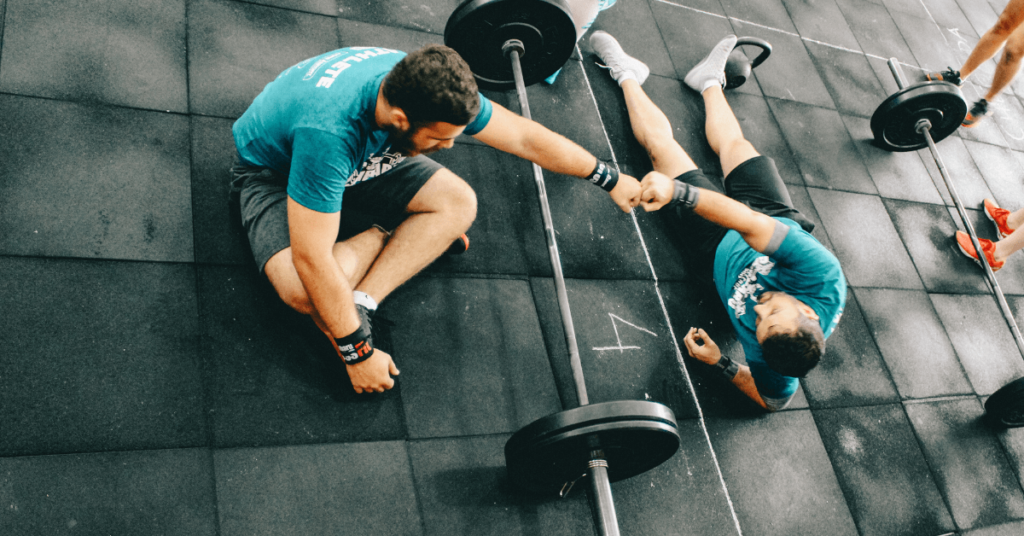
Physical benefits of a wellness coach

4 REASONS WHY YOU NEED A WELLNESS COACH (FROM PHYSICAL TO EMOTIONAL BENEFITS)

“Health is a state of the body. Wellness is a state of being.” 

What if I told you there was a way to not only better your physical health, but your mental health too? 

Cue health and wellness coaches

Health and wellness coaching is fast becoming one of the most beneficial and constructive financial commitments you can make. But the thing is, a number of people don’t quite understand the concept or see the benefits of it until they try it out for themselves. 

More than an exercise trainer

A wellness coach is more than just a personal trainer. We look at your entire wellbeing and focus on giving support and guidance to help develop both your psychological and physical health. 

Basically, a health and wellness coach is someone who not only helps you reach optimal physical health but helps you improve your mental state of being too. This person becomes your guide to holistic wellbeing (a good health guru, if you will). Combining healthy lifestyle choices, a good diet, exercise, stress optimisation and sleep are ways your coach will help you to become the best version of yourself. 

Some of the focus areas of wellness coaching include: 

  • Nutrition 
  • Health 
  • Weight
  • Stress

For business and individuals

Wellness coaching can also move beyond the focus of one individual. We also work with companies to help improve their brand’s work culture and improve the health and stress levels of employees. 

Have a look at this article on how to bring wellness into the workplace (it’s a great read!)

Let’s take a look at some of the psychological and physical benefits of a wellness coach…

Psychological benefits of a wellness coach

There is a close link between mental and physical wellbeing, in fact, the two of them work hand in hand. 

Here are some of the focus areas of psychological improvement through wellness coaching:

1. Guidance and support

Trust us when we say we have “been there and done that”. Our personal experience and background expertise are what allows us to help you work through struggles in your life. 

Our outside perspective can offer a grounded and objective reality to help bring about concrete goals and a tranquil mindset. 

Issues such as stress, anxiety and depression are tackled head-on to help you take logical steps in overcoming these mental blocks. 

Check out this article on how to handle anxiety in the workplace. It is this kind of support and guidance that we seek to consistently give you. 

2. Real advice for real people

We don’t believe in fads. We don’t do ‘get-fit-fast’ plans or ‘lose-weight-today’ diets. We create our plans based on your individual needs and goals. 

Everyone is different. Everyone has different goals and capabilities. We work with you to create health and wellness plans that not only provide you with advice and steps to reach your mental and physical goals, but we are with you every step of the way to ensure you get to your end goal. 

3. Mental wellbeing and positivity

Health starts in the mind. We help change your mindset and work with you to get healthy through positive reinforcement. 

This isn’t some kind of “you can do it” on repeat, we help you to shift your view of yourself into one that is positive, allowing you to believe in your capabilities and be comfortable in your own strength and body. 


Physical benefits of a wellness coach


Physical benefits of a wellness coach

1. Tailored fitness and eating plan

We create our eating and exercise plans to include real, nutritious and healthy meals, as well as exciting and interactive workouts. 

We encourage you to eat healthy food that makes you happy and give you all the information you need about healthy eating and ingredients. 

We also ensure you are fully equipped with all the knowledge needed to never feel like you are ‘doing something wrong’ in the gym. 

2. Someone to motivate you

You’re less likely to cancel a gym session when you know one of our coaches will check in with you, if not train with you at the gym. 

This accountability helps encourage you to stick to your plan and give you both an in-person and digital (we’re always just one message away) training buddy. 

3. Challenge yourself

When working with you, we get to know your limits and capabilities. We help you to push outside of your comfort zone (but never force you to the point of injury), helping you to create new limits and reach new heights in your physical abilities (you’re stronger than even you may know!). 

Your wellbeing starts with you

Want to take the next step and find out more about our wellness coaching? Get in touch with our team and we can work on finding the balance and health in your life. 

WellBe Diet Strategy

THE FOOL-PROOF DIET TO GET THE BODY OF YOUR DREAMS

I’m sure you were hoping I’d start explaining this magical diet, probably containing kale or some gag-worthy detox tonic, which will guarantee a slimmer and trimmer you in just 2 weeks! Am I right?

Unfortunately, as much as we’d all like to believe there is a unicorn-diet out there that could deliver on these promises, the hard reality is that there just isn’t. When it comes to dieting or exercise, anything that sounds extreme or too good to be true, most probably is and most probably should be avoided at all costs. These extreme approaches are termed “fad diets” and they’re downright dangerous for you. They perpetuate destructive restriction and binge cycles that by the end of it, leave you fatter, frustrated and more disillusioned than when you started.

When it comes to nutrition and training there is no “one-size-fits-all”, no perfect program. What works for one person may not necessarily work for you, and that doesn’t mean one way is better or worse than the other. So next time you’re looking to weed out the fads diets from the truly healthy changes, ask yourself the following 5 questions:


1. Does it fit my lifestyle?

If you’re a professional athlete, a busy student or a desk-bound businessman/woman, your diet must adapt to and complement your lifestyle, not the other way around.


2. Is it something I can adhere to on a consistent basis?

If you can’t stomach rich, high-fat foods, stop trying to force yourself to be a “banter”. If you can’t stand the taste of kale, stop trying to survive on green juices. The nutrition choices you make need to align with your own personal food preferences and become habits that unconsciously form part of your everyday eating.


3. Will it help you achieve your desired results without forcing you to go to extreme measures?

Where most people go wrong is they try doing too much too soon. They drop calories, cut out certain food groups, go cold-turkey on all the foods they crave and although initially see results, inevitable the unsustainability of the diet catches up with them and they rebound. Small, manageable baby-steps in the right direction is all it takes.


4. Does it allow you to incorporate the foods you enjoy eating? (In moderation of course!)

I refuse to live in a world where I’m told I can’t ever eat bread or chocolate again. You don’t have to ban or demonize the foods you love- rather learn smart ways to fit them into your life and enjoy them mindfully.


5. Can you see yourself maintaining this for weeks, months and years down the line?

If you’re thinking of this as a sprint- you’ve lost already. You need to think of this as a permanent lifestyle change. So if your current diet is giving you commitment phobia, that’s a sure sign to get out now.

There are pros and cons to every type of nutrition program. The sooner you stop giving into the ridiculous “quick-fix” fads out there and find out what type of nutrition program you can enjoy adhering to the most, the sooner you’ll set yourself up not only to successfully lose weight, but keep it off too.


WellBe Company

8 REASONS WHY EVERY WOMAN SHOULD LIFT WEIGHTS

Maybe you’ve thought about lifting weights. Maybe you’ve even done some dumbbell curls or picked up a barbell. But every time you hit the iron though, you feel unsure, insecure, and a little fearful.

Undoubtedly, you’ve heard the horror stories: lifting heavy weights makes women bulky, it’s dangerous, it’s bad for your joints, and once you have muscle, you can’t stop lifting or it will all turn to fat. It’s all BS, and it feeds into stereotypes that are keeping too many women from experiencing the profound benefits of resistance training.

It’s time to put that fear and uncertainty aside. The fact is lifting weights does none of those awful things. What it does is help you to live in a healthier, stronger body.

When you sit down to list your fitness objectives, you may be surprised to learn that that strength training will not only help you reach them, but may reach them faster than performing cardio exercise alone.

Now don’t get me wrong, yoga and spinning definitely have their place in a well-rounded fitness routine (and are both things I regularly do myself). But if you’re feeling a bit stuck in a rut and not seeing the results you want, strength training could be just the thing missing from your training regimen! Here’s why:


  1. MORE EFFECTIVE FAT LOSS

Think weightlifting only benefits those who want shirt-ripping arms? Think again.

Although many people consider weightlifting only a means to add size, when compared head-to-head against cardiovascular exercise, resistance training comes out on top in the battle to burn calories.

How is that possible you ask? It boils down to your body’s ability to burn fat during and after an intense weight-based exercise session. After a heavy bought of strength training, you continue to consume additional oxygen in the hours and even days that follow. This is known as excess post-exercise oxygen consumption or EPOC.

When your body uses more oxygen, it requires more caloric expenditure and subsequently boosts your metabolic rate.


  1. MORE MUSCLE = MORE CALORIE BURN

As you increase strength and lean muscle mass, your body begins to us calories more efficiently. Daily muscle contractions from a simple blink to a heavy squat contribute to how many calories you burn in a given day. Sitting burns fewer calories than standing; standing burns fewer than walking, and walking burns fewer than strength training.

The more muscle contractions you experience during a day, the more calories you’ll burn. If you have more lean muscle mass, you’ll have more muscle contractions and hey presto, burn more calories!


  1. CURVES

Now endurance-type training can definitely help you lose weight, however that weight comes in the form of both fat and muscle. If you’re losing both fat and muscle, you can lose your lovely curves as well. In contrast, regular resistance training will help define your arms and shoulders, build your glutes and tone your legs, promoting a more hourglass body shape.

So if its curves you’re after, strength training is what you need to create and sustain them.


  1. QUALITY SLEEP

Strength training and sleep? Yip, you hear right! Numerous studies have shown how regular resistance training or high-intensity training, particularly when done in the morning, greatly improves sleep quality, aiding in your ability to fall asleep faster, sleep deeper, and wake less often during the night.


  1. INCREASED ENERGY

Remember that EPOC we mentioned earlier – the fact that resistance training causes an increase in energy expenditure hours after you train. Well, a study published by the National Institute of Health suggests that the consistent increase in energy expenditure, even after a minimal strength training session, may positively impact energy balance and fat oxidation. Who knew grabbing a barbell could have the same energy-boosting effects as an afternoon cup of coffee?


  1. HEART HEALTH

Studies found in the Journal of Strength and Conditioning have shown that those who lift weights are less likely have heart disease risk factors such as elevated blood pressure, high triglycerides, a large waist circumference and elevated glucose levels.

Pumping iron is actually so effective at reducing your risk of heart disease that it has since been approved as a healthy form of exercise for those at risk from the American Heart Association.


  1. BONE HEALTH

Both bone and muscle mass naturally decreases as you age. However, due to their declining levels of estrogen, postmenopausal women are at even greater risk for developing weak, porous bones and osteoporosis. Weight-bearing exercise, such as resistance training, has been proven as an excellent way to combat loss of bone mass, and subsequently decrease the risk of osteoporosis. And remember, the earlier you begin weightlifting, the greater chance you have to maintain bone health later in life.


  1. STRESS RELIEF

Exercise, in general, is a great way to manage stress. Researchers have consistently found that those who regularly strength train tend to manage stress better and experience fewer adverse reactions to stressful situations as those who do not exercise.

In addition, resistance-training studies on older adults show that moderate-intensity weightlifting improves memory and cognitive function. So next time you need to blow off some steam, hit the weights.


LIFT LADIES, LIFT!

All of us want to feel strong, determined, and confident in everything we do: from fitting into jeans, to moving heavy furniture, to playing with kids, to dealing with a stressful career. Resistance training can benefit all these aspects of your life. So be sure to put it in your fitness plan and feel stronger, healthier, and more confident!


REFERENCES

Roveda, Eliana, et. Al. Effects of endurance and strength acute exercise on night sleep quality. International SportMed Journal. 2011; 12(3): 113-124.

Kirk, Erik P., et. Al. Minimal resistance training improves daily energy expenditure and fat oxidation. Med Sci Sports Exerc. 2010; 41(5): 1122-1129.

Magyari PM, Churilla JR. Association between lifting weights and metabolic syndrome among U.S. Adults: 1999-2004 National Health and Nutrition Examination Survey. J Strength Cond Res. 2012 Nov; 26(11): 3113-7.

Cardoso, Crivaldo Gomes, et. Al. Acute and chronic effects of aerobic and resistance exercise on ambulatory blood pressure. Clinics (Sao Paulo). 2010; 65(3):317-325.

Muir JM, Ye C, Bhandari M, Adachi JD, Thabane L. The effect of regular physical activity on bone mineral density in post-menopausal women aged 75 and over: a retrospective analysis from the Canadian multicentre osteoporosis study. BMC Musculoskelet Disord. 2013 Aug 23; 14: 253.

Stone M, Stone Meg, Sands W. Psychological Aspects of Resistance Training. In: Principles and Practice of Resistance Training. Champaign, IL: Human Kinetics; 2009. p. 229-241.

WANT FAST FAT LOSS? THE HIIT VS LISS FACE-OFF

HIIT and LISS are acronyms for High-Intensity Interval Training and Low-Intensity Steady State respectively. They are two commonly used cardio styles and differ greatly in both practical application and physical effects.

HIIT consists of short, all-out sprint intervals alternated with periods of low-intensity recovery periods. An example would be a 30 second 100% effort sprint followed by a 1-2 minute steady pace walk, repeated 10 times (think sweat, LOTS of sweat). LISS, on the other hand, would involve a constant low-to-moderate paced walk, jog or bike ride at an intensity level that still raises your heat rate but allows for casual conversation.

HIIT, like weight training, is a form of anaerobic exercise, meaning it burns glucose for energy without oxygen being present. During bouts of HIIT training, your body’s fuel burning systems are put under a lot of stress. In order to meet the energy demands you are putting your body under, your body responds in two ways, 1) by increasing the activity of fat-burning enzymes to help free up available energy and 2) by increasing the mitochondrial capacity in your muscles. Mitochondria are the energy-producing units of your body. HIIT thus signals to your body to increase the total mitochondrial density in your muscles, meaning you have more fat-burning units at your disposal.  All of these metabolic adaptations have a cascading and synergistic effect, resulting in enhanced metabolic and fat loss activity over time.

What this means in real-life is that by doing HIIT your body is becoming more physically efficient and effective at turning on and utilizing its fat burning mechanisms and that this fat loss process is not only kept elevated for hours after your training has ended- termed the “afterburn” effect- but rather that these fat-burn changes are stable and lasting.

In contrast, due to the lower-intensity nature of LISS, this cardio strategy does not pose this same metabolic strain, thus limiting its fat burn potential to solely those minutes (or hours) you actively spend at the gym. Your body also has the tendency to adapt quickly to LISS exercise, meaning you will eventually burn fewer and fewer calories following the exact same cardio workout. Now don’t get me wrong, I’m not saying that you should ditch LISS cardio all together. LISS cardio has many heart-protective and general health-promoting effects that should not be ignored (I personally find it quite therapeutic going for long runs or walks every week). All I’m saying is that slaving away for hours every day on a treadmill or bike hoping to see the physical results you want is not the best approach to cardio if your goal is fat loss.

So who wins? Well if your goal is to lean down and get fit fast- HIIT is your best cardio investment strategy that will ensure you get more burn-for-your-buck in return.

Happy sweating!